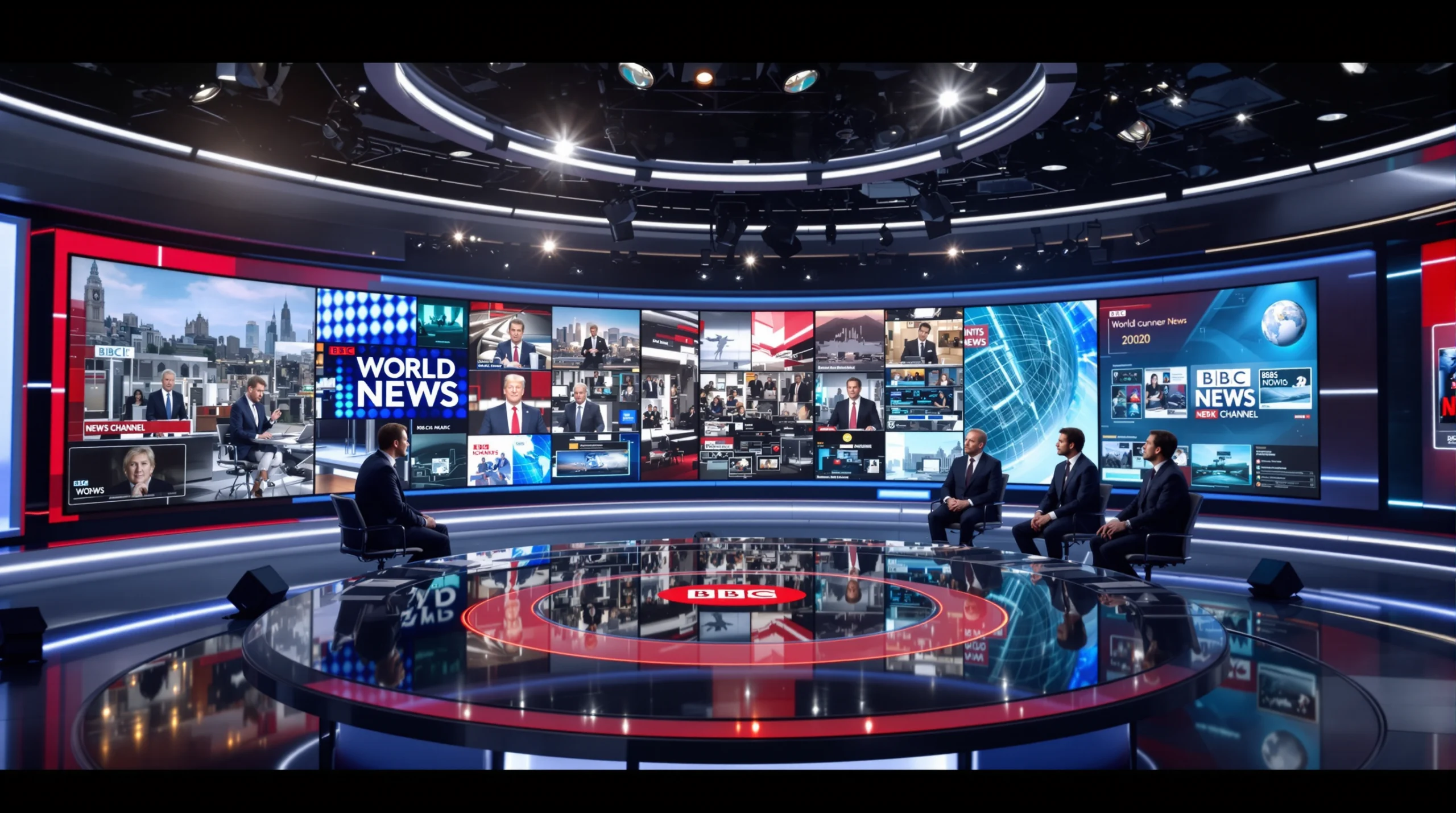
The BBC News Channel’s Big Shift: What’s Really Happening?
The BBC News Channel has made a dramatic shift in its broadcasting approach, and everyone’s talking about it. As someone who’s been following media trends for years, I wanted to cut through the noise and answer the questions people are actually asking about this major change.
Let’s get into what this BBC News consolidation really means for viewers, how it affects breaking news coverage, and what happens during major events like elections.
What Exactly Happened to the BBC News Channel?
On 3 April 2023, the BBC News channel merged with BBC World News to create a single unified service.
This wasn’t just a minor rebrand – it fundamentally changed how BBC delivers news content.
The new combined channel now shares:
- Most programming between UK and international audiences
- A roster of well-known presenters including Matthew Amroliwala, Christian Fraser, Lucy Hockings, and Maryam Moshiri
- A more global perspective on news coverage
The key difference is that UK viewers now get “opt-outs” for domestic news when major national stories break, rather than having a completely separate channel.
This move mirrors what many businesses are doing with content creation strategies – finding efficiencies while maintaining quality output.
Why Did the BBC Combine Its News Channels?
The BBC made this move for several practical reasons:
- Cost savings in an increasingly competitive media landscape
- Streamlining resources while maintaining quality journalism
- Creating a more cohesive global-to-local news experience
I’ve seen similar consolidation strategies work well in other sectors. By pooling resources, the BBC can focus on quality rather than maintaining separate but similar operations.
When you think about it, much of the world news is relevant to UK audiences anyway, so there was significant content overlap between the channels.
How Does the BBC Handle UK Elections on This New Combined Channel?
During the 2024 general election, the BBC temporarily reverted to a more UK-focused approach:
- They provided dedicated domestic coverage from 9am to 8pm throughout the campaign
- A special UK-specific bulletin was added at 11pm following Newsnight
- This continued through major political events like the State Opening of Parliament
Eventually, the 11pm bulletin was replaced by World News America in October 2024.
This demonstrates the flexibility of the new system – they can shift back to domestic-heavy coverage when national events warrant it, without maintaining separate channels year-round.
This approach reminds me of how modern AI tools for business can adapt to different contexts while maintaining core functionality.
How Does the BBC Breaking News System Work Now?
The BBC follows a clear protocol for breaking news:
- News breaks first on BBC Radio 5 Live
- Then moves to the unified BBC News channel
- For truly major breaking stories, they interrupt regular programming
The visual indicators for breaking news have evolved over time:
- The “breaking news sting” animation introduced in 2003
- Replaced with a red strapline in 2007
- Live news ticker added in 2006
- Ticker redesigned to display full headlines, turning red for breaking news
- Graphics updated again in July 2019
These visual cues help viewers immediately recognize when something significant is happening – an important consideration in our increasingly busy digital landscape.
Who Are the Main Presenters on the New Combined Channel?
The unified channel features established BBC talent:
- Matthew Amroliwala – experienced presenter known for international coverage
- Christian Fraser – former correspondent turned studio anchor
- Lucy Hockings – seasoned international news presenter
- Maryam Moshiri – stepped up to lead her own program
Interestingly, Yalda Hakim was initially part of this lineup but left for Sky News in September 2023, creating an opportunity for Moshiri to take on a more prominent role.
Having the right presenting talent is crucial to viewer engagement, much like how automation tools need the right interfaces to be truly effective.
What Does This Mean for UK Viewers?
For those of us watching in the UK, the changes mean:
- More international perspective in day-to-day news coverage
- Domestic news still featured, especially during major UK events
- A more consistent viewing experience across platforms
- Access to a wider range of international correspondents
The trade-off is slightly less dedicated UK content during regular news cycles, but more comprehensive global coverage.
This shift reflects how many of us consume news anyway – with an interest in both local happenings and global events that might affect us, similar to how business AI tools balance specific tasks with broader capabilities.
Will the BBC Ever Return to Separate UK and International Channels?
While nothing is impossible in the broadcasting world, a return to separate channels seems unlikely for several reasons:
- The financial benefits of consolidation are significant
- The opt-out system for UK coverage provides flexibility
- Digital platforms allow for more customized content alongside the broadcast channel
The BBC has demonstrated it can flex the channel’s focus during major national events, which reduces the need for permanent separate channels.
This approach mirrors modern content strategies that adapt to audience needs rather than maintaining rigid structures.
Is the BBC News Channel Still Reliable for UK-Specific News?
Yes, the BBC News Channel remains a reliable source for UK news, though with some changes:
- Major UK stories still receive prominent coverage
- During significant national events, UK-specific coverage increases
- The opt-out system ensures critical domestic news isn’t missed
For viewers wanting exclusively UK content, BBC’s digital platforms and regular television bulletins on BBC One provide focused domestic coverage.
The BBC News Channel’s big shift represents a modern approach to news delivery – recognizing that our interests don’t stop at national borders, while ensuring we stay informed about matters close to home.
Written by Hayley Brown, owner of allin1app.com, lover and obsesser of all things AI and automation and provides significant added value for readers including how to set up time saving automations using Make