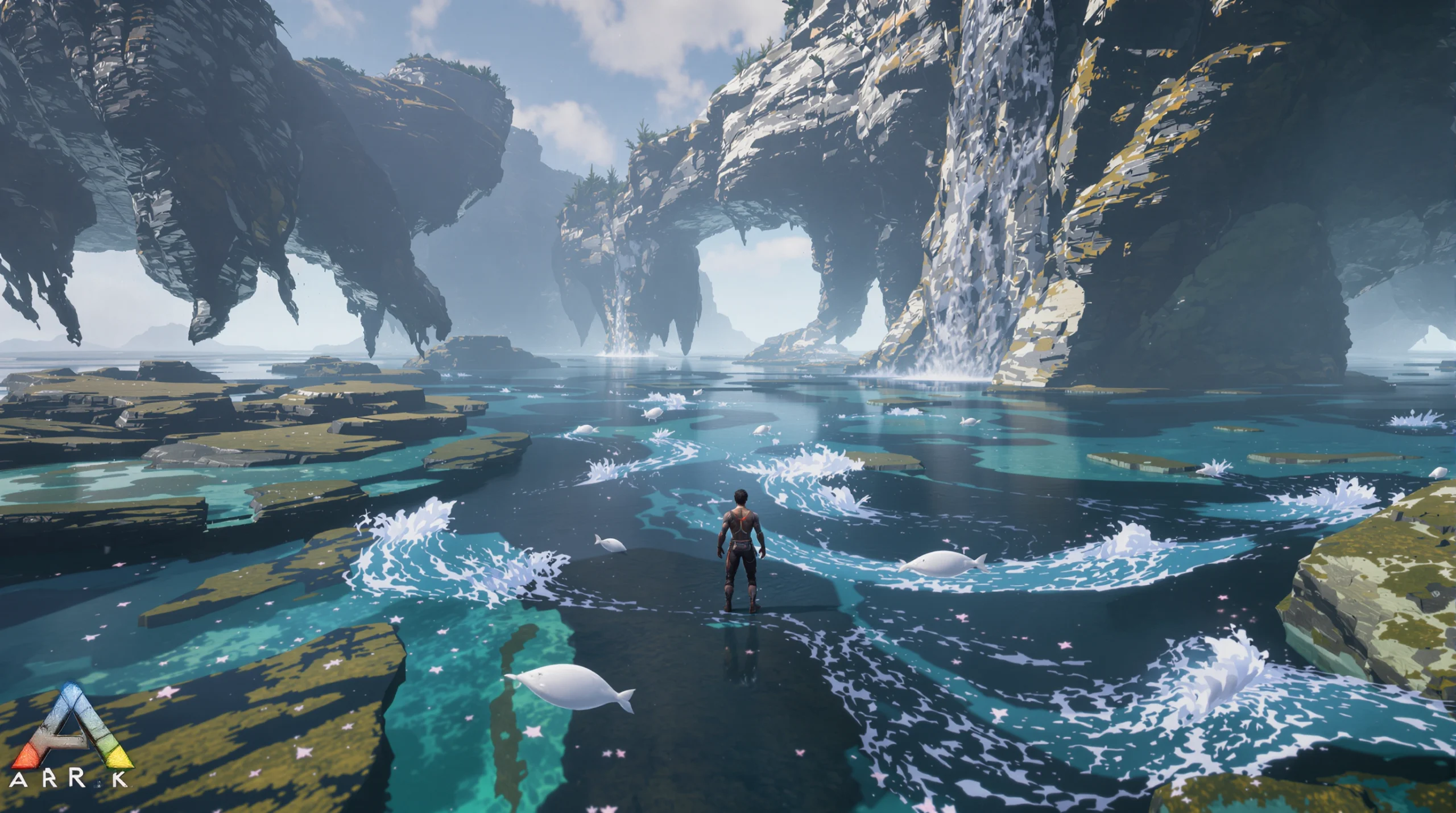
ARK: Aquatica’s AI Trailer Backlash – What’s Really Going On?
The recent ARK: Aquatica AI trailer backlash has ignited a firestorm of debate across the gaming community. When Studio Wildcard dropped this trailer at GDC 2025, nobody expected the avalanche of criticism that followed. But what’s actually happening beneath the surface of this controversy?
What caused the ARK: Aquatica trailer backlash?
The trailer failed spectacularly for one simple reason – it looked artificial.
Gamers aren’t daft. They can spot generic AI-generated visuals from a mile away.
The proof? Look at the YouTube metrics:
- Thousands of dislikes within hours
- Comment section flooded with criticism
- Terms like “AI slop” trending alongside the game
It’s like serving microwave meals at a gourmet restaurant. Fans expected handcrafted, passionate content for a beloved franchise. Instead, they got something that felt mass-produced and soulless.
This reflects a growing trend where automated content creation clashes with audience expectations for authenticity. The gaming community values craftsmanship, and this trailer missed that mark entirely.
Why did Studio Wildcard distance themselves from ARK: Aquatica?
Studio Wildcard’s reaction speaks volumes. Rather than defending the trailer, they subtly stepped back.
Their strategy appears twofold:
- Protect their reputation for quality established with the original ARK: Survival Evolved
- Maintain focus on their flagship projects – ARK: Survival Ascended and ARK 2
This distancing manoeuvre raises questions about the relationship between Studio Wildcard and Snail Games (the actual developers behind Aquatica).
Was this a case of a publisher losing control of quality standards? Or perhaps AI implementation decisions were made without full creative alignment?
Either way, their silence speaks louder than words. When your trailer generates this level of backlash, saying nothing actually says everything.
Is AI ruining game trailers?
Not necessarily, but implementation matters enormously.
AI has legitimate uses in game development:
- Procedural world generation
- NPC behaviour enhancement
- Performance optimisation
Where things go wrong is when AI replaces human creativity rather than enhancing it.
The ARK: Aquatica trailer felt disconnected from the franchise’s spirit – like someone fed “underwater dinosaur game” into an AI system and called it a day.
The core issue isn’t the technology but how it’s applied. When AI becomes a cost-cutting shortcut rather than a creative tool, the results feel hollow. You can see similar patterns across industries where automation replaces craftsmanship.
What does this mean for the future of ARK: Aquatica?
First impressions matter tremendously in gaming. This trailer has created an uphill battle for ARK: Aquatica before it’s even released.
To recover, Snail Games needs to:
- Address the criticism directly
- Release gameplay footage that demonstrates human creativity
- Clarify their development approach going forward
The gaming community can be forgiving – but only when developers show genuine effort to course-correct.
This situation demonstrates why building trust with your audience matters more than quick production methods. Many developers have found that automating the right processes while keeping creative control in human hands strikes the perfect balance between efficiency and quality.
Are there any legitimate uses for AI in game marketing?
Absolutely, when used thoughtfully.
Smart applications include:
- Personalised marketing that adapts to player preferences
- Background asset generation (with human refinement)
- Data analysis to understand audience reactions
The key difference? These approaches use AI as a collaborative tool rather than a replacement for human creativity.
In fact, some studios are finding innovative ways to leverage technology while maintaining artistic integrity. The most successful examples tend to be transparent about their methods rather than trying to pass off AI work as handcrafted.
What can developers learn from this backlash?
The ARK: Aquatica situation offers several valuable lessons:
| Lesson | Application |
|---|---|
| Authenticity matters | Be honest about development methods |
| Fans recognise shortcuts | Don’t underestimate audience perception |
| Brand reputation is fragile | Quality control partnerships carefully |
The most successful developers understand that while AI can enhance productivity, it can’t replace the human touch that makes games special.
This becomes particularly important for established franchises with dedicated fanbases who have specific expectations about quality and style.
For studios looking to integrate AI responsibly, workflow automation tools can handle mundane tasks while keeping creative decisions firmly in human hands.
What should gamers expect going forward?
The ARK: Aquatica controversy likely marks a turning point in how games are marketed.
We’ll probably see:
- More transparency about development methods
- Clearer labelling of AI-assisted content
- A renewed emphasis on showcasing human creativity
Smart studios will learn from this misstep and find better balances between efficiency and authenticity.
The gaming community has sent a clear message: they value human creativity and passion. Technology should enhance these qualities, not replace them.
The ARK: Aquatica AI trailer backlash isn’t just about one disappointing video – it’s a watershed moment for how games are marketed and how developers communicate with their audiences about the role of artificial intelligence in creating the experiences we love.