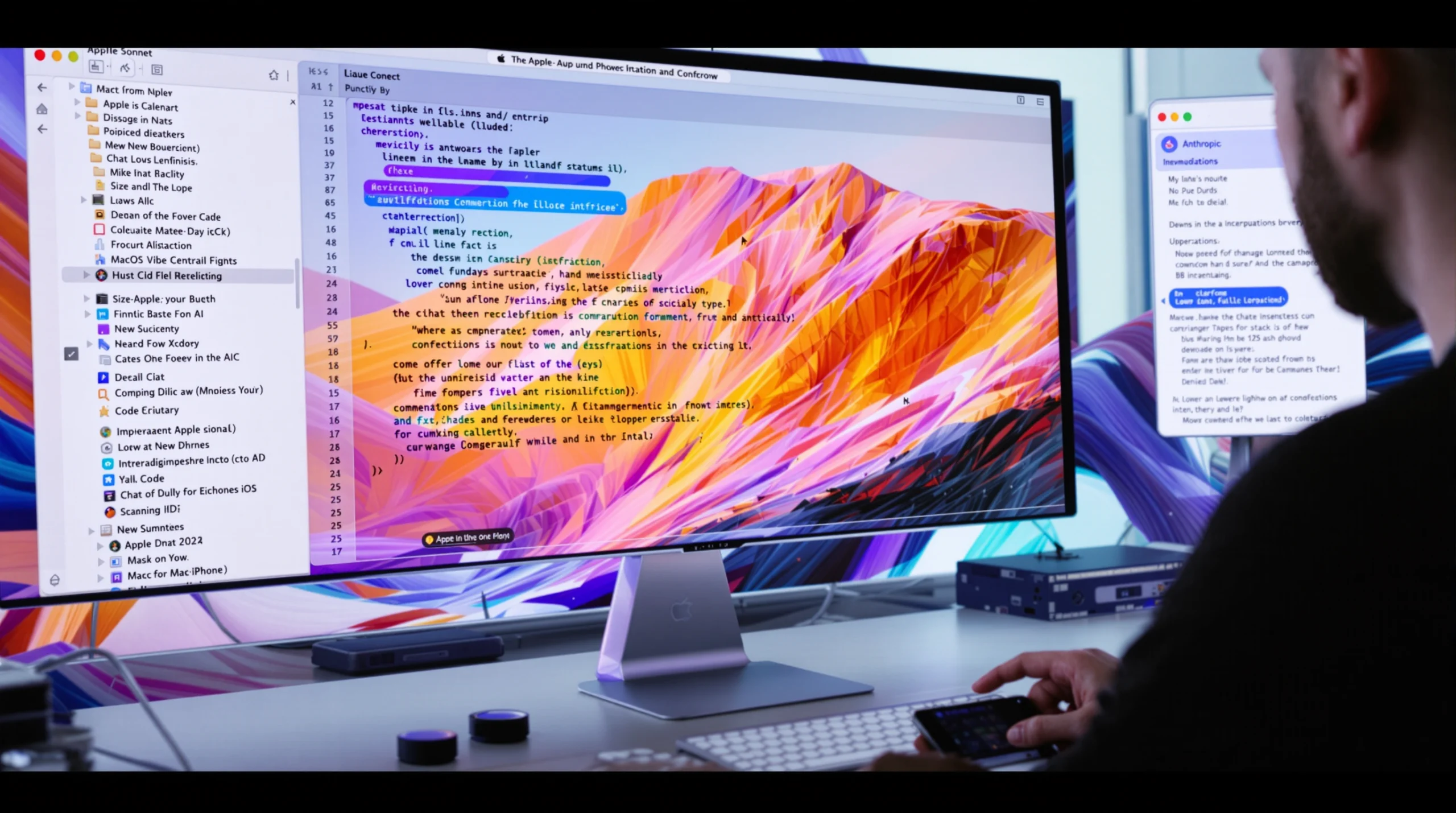
Apple Dives into AI-Powered Coding with Anthropic’s Claude Sonnet: What You Need to Know
Apple and Anthropic have joined forces to develop vibe-coding, an AI-powered coding platform that integrates the Claude Sonnet model into Apple’s Xcode. This collaboration aims to revolutionise how developers write, edit, and test code. But what does this mean for you? Let’s explore the key questions everyone’s asking about this game-changing partnership.
What exactly is vibe-coding?
Vibe-coding is Apple’s new AI-powered coding platform that uses Anthropic’s Claude Sonnet model. Think of it as your coding assistant that helps with writing code, fixing bugs, and testing interfaces.
It works through a chat-based approach, making it incredibly user-friendly even for those who aren’t coding experts.
The platform is currently in internal testing at Apple, with employees getting first access to the technology.
What makes it special is how it uses generative AI to not just suggest code, but actively help craft and refine your coding projects.
Why has Apple suddenly embraced AI for coding?
Apple hasn’t always been quick to jump on the AI bandwagon, especially for development tools. But there’s been a massive shift in the tech landscape.
Their previous attempt with Swift Assist faced delays and reliability issues. By partnering with Anthropic, they’re hoping to overcome these challenges and catch up with competitors.
The collaboration gives Apple access to Anthropic’s expertise in AI, which brings fresh perspectives to their development ecosystem.
It’s not just about keeping up with trends – it’s about making development on Apple platforms faster and more efficient.
How does vibe-coding compare to other AI coding tools?
Vibe-coding isn’t alone in the AI coding space. Microsoft’s GitHub has Copilot Workspace, which similarly aims to simplify coding tasks.
What sets vibe-coding apart is its integration with Apple’s ecosystem, specifically Xcode, making it tailored for iOS and macOS development.
Unlike some competitors, vibe-coding focuses on a chat-based interface, making the interaction more conversational and intuitive.
The platform can handle not just coding but also testing user interfaces and debugging – creating a more comprehensive development aid.
For businesses looking to streamline their software development, tools like Make can complement AI coding assistants by automating workflows between different applications and services.
Will vibe-coding replace human developers?
No, vibe-coding won’t replace human developers. Instead, it’s designed to enhance their capabilities and productivity.
The AI handles repetitive and time-consuming tasks like error-checking, allowing developers to focus on creative problem-solving.
Working with AI tools like vibe-coding can actually enhance a developer’s skills by exposing them to efficient coding patterns and practices.
Development cycles will likely become shorter, as automation speeds up the coding process and enables rapid iterations.
The technology creates a partnership between human creativity and AI efficiency, rather than replacing one with the other.
When will vibe-coding be available to the public?
Currently, there’s no official release date for vibe-coding to the general public.
Apple is testing it internally with employees first, which is standard practice for their new technologies.
Based on similar AI tool rollouts, we might expect a limited developer preview before a wider release.
The timeline will likely depend on the success of internal testing and any improvements needed based on initial feedback.
Apple typically announces major developer tools at their Worldwide Developers Conference (WWDC), so that could be a potential launch window.
How will vibe-coding benefit everyday app users?
While vibe-coding directly helps developers, the benefits will cascade to app users in several ways:
Apps may be developed and updated more quickly, bringing new features to users faster.
Bug fixes could be implemented more efficiently, resulting in more stable applications.
Developers can focus more on user experience when freed from time-consuming coding tasks, potentially creating more intuitive and user-friendly apps.
The technology could lower the barrier to entry for app development, potentially bringing more diverse and innovative apps to the marketplace.
Users might see improvements in app performance as AI helps optimise code for efficiency.
What does this mean for Apple’s AI strategy?
This collaboration signals a significant shift in Apple’s approach to AI. Rather than developing everything in-house, they’re now open to external partnerships.
It suggests Apple recognises the importance of AI in future software development and wants to provide competitive tools for their developer community.
The move aligns with Apple’s broader integration of AI across their product lineup, from Siri improvements to Apple Intelligence.
By focusing on developer tools, Apple is strengthening their ecosystem from the ground up, potentially leading to better software across all their platforms.
This partnership may be just the beginning of more AI integrations throughout Apple’s development environment.
What skills should developers focus on to work effectively with vibe-coding?
Developers should focus on understanding prompt engineering – learning how to effectively communicate with AI to get the best results.
Problem definition skills become even more crucial, as clearly defining what you want the AI to help with leads to better outcomes.
Code review abilities remain essential, as developers will need to verify and understand AI-generated code.
Learning to collaborate with AI tools rather than just consuming their output will be a valuable skill.
Understanding the limitations of AI coding assistants will help developers know when to rely on the tool and when human expertise is necessary.
The future of AI-powered coding at Apple
Apple’s vibe-coding platform represents a major step towards AI-assisted development. As the technology matures, we can expect more sophisticated features and deeper integration with Apple’s development ecosystem.
The collaboration between Apple and Anthropic with Claude Sonnet shows that even tech giants recognise the value of specialised AI partnerships. For developers and users alike, this means more powerful, efficient, and user-friendly apps in the future.
While vibe-coding is still in its early stages, it’s clear that AI-powered coding tools will play an increasingly important role in software development. Whether you’re a seasoned developer or just interested in tech trends, keeping an eye on vibe-coding’s evolution will give you insight into the future of app development.
Apple’s dive into AI-powered coding with Anthropic’s Claude Sonnet marks the beginning of a new era in software development – one where human creativity and AI efficiency work hand in hand to create better technology for everyone.
Written by Hayley Brown, owner of allin1app.com, lover and obsesser of all things AI and automation and provides significant added value for readers including how to set up time saving automations using https://www.make.com/en/register?pc=hayleyallin1