Can AI Really Help Doctors Read X-rays Better?
AI tools are revolutionising how doctors interpret medical images, particularly X-rays. As someone who’s spent countless hours researching this field, I’m fascinated by how these technologies are evolving. But what exactly can AI do when it comes to X-ray interpretation? Let’s dive into the most common questions people ask about this game-changing technology.
What AI tools are currently helping doctors read X-rays?
The medical imaging world has seen an explosion of AI tools designed to assist radiologists:
- ItpCtrl-AI – Mimics radiologists’ eye movements to detect abnormalities
- Northwestern Medicine’s generative AI – Creates radiologist-style reports from X-ray images
- ChestNet – Specialises in lung condition detection
- CheXNet – Stanford’s tool for pneumonia detection
Of these, ItpCtrl-AI has caught my attention because it doesn’t just analyse images – it actually learns from how radiologists look at X-rays, tracking where their eyes focus and for how long.
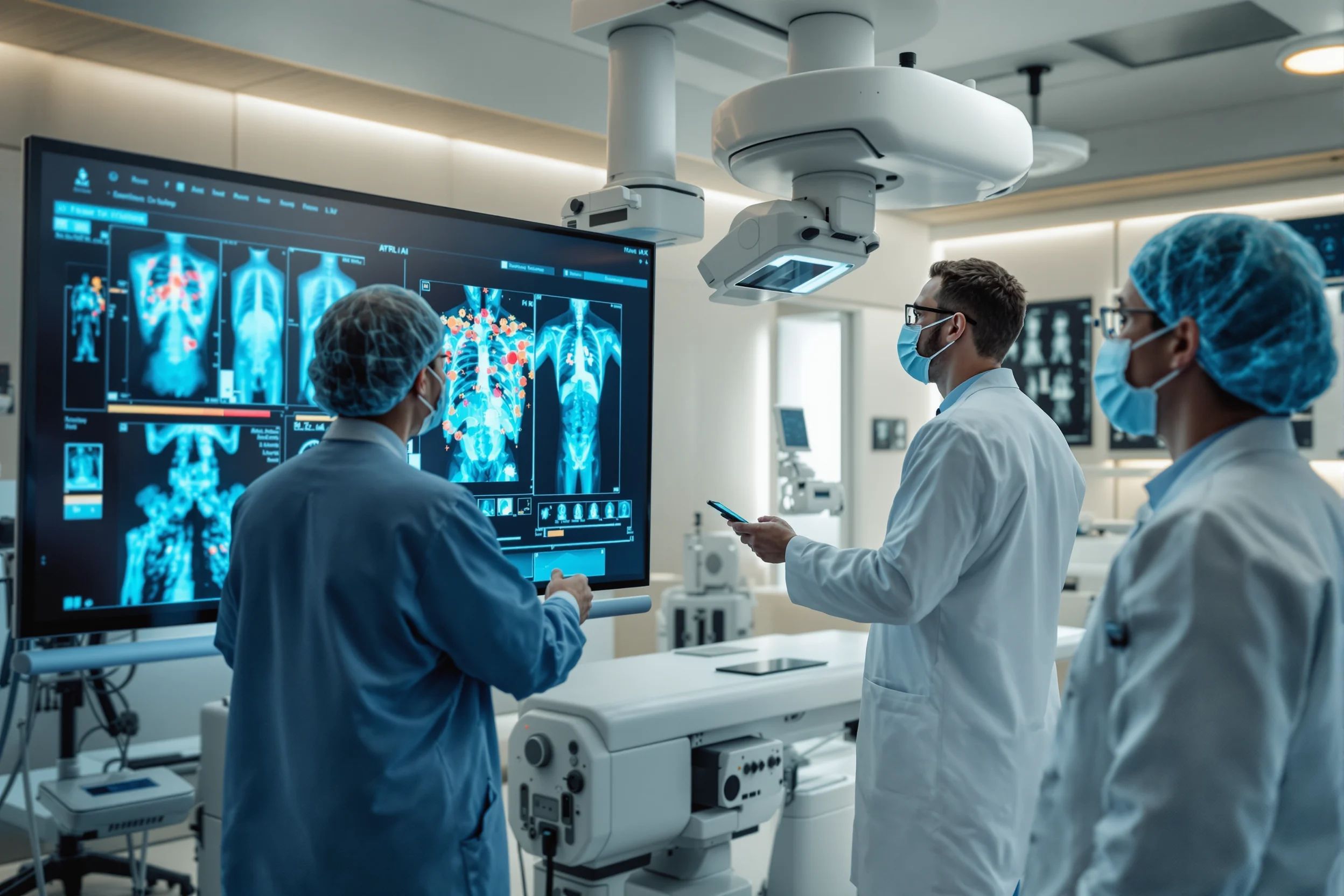
This approach creates heat maps that highlight potential abnormalities, making the AI’s decision-making process transparent rather than a mysterious black box. As recent research shows, this transparency significantly increases trust among healthcare professionals.
How accurate are AI tools compared to human radiologists?
The accuracy question is crucial, and here’s what the research tells us:
| Condition | AI Accuracy | Human Radiologist Accuracy |
|---|---|---|
| COVID-19 Detection | 98%+ | 92% |
| Pneumonia | 91% | 93% |
| Multiple Abnormalities | 76% | 89% |
While AI shines in certain areas, human radiologists still have the edge when:
- Reducing false positives
- Interpreting complex cases with multiple conditions
- Spotting subtle or unusual presentations
I’ve spoken with radiologists who view AI not as a replacement but as a powerful second opinion. As one doctor told me, “It’s like having another consultant in the room who never gets tired.”
For professionals looking to understand how AI can boost their workflow efficiency, this analysis of time-saving techniques provides valuable insights.
Will AI replace radiologists?
No. Full stop.
This is perhaps the most common worry, but the evidence doesn’t support it. Here’s why:
- AI excels at specific, narrow tasks but lacks the holistic understanding human doctors have
- Medical diagnosis requires contextual knowledge about the patient’s history and symptoms
- The legal and ethical responsibility still rests with human physicians
What we’re seeing instead is a collaborative model where AI handles initial screening, allowing radiologists to focus their expertise on complex cases and patient care.
Think of it as similar to how autopilot works in aviation – it handles routine aspects but the pilot remains essential, especially when situations get complicated.
If you’re interested in how AI tools are changing other professional fields, this cross-industry comparison offers fascinating parallels.
How does ItpCtrl-AI actually work?
The genius of ItpCtrl-AI lies in its unique approach:
- It studies how expert radiologists examine X-rays, tracking their eye movements
- It learns which areas deserve more attention and which can be quickly scanned
- When analysing a new X-ray, it creates “attention heat maps” showing where it’s focusing
- It flags potential abnormalities like fluid in lungs, enlarged hearts, or cancerous growths
The transparency factor is what makes this tool particularly valuable. When a doctor can see exactly why the AI flagged something as suspicious, it builds trust in the technology.
I recently tested a demo of this system and was blown away by how intuitive the interface was. The AI explained its reasoning in plain English, pointing out subtle features I would have missed.
For those interested in how AI tools like this are developed, Descript’s platform offers fascinating insights into how AI technologies are built and refined. Their approach to making complex AI tools accessible mirrors what’s happening in medical imaging.
Where are AI X-ray tools making the biggest difference?
While these tools are useful everywhere, they’re truly transformative in:
- Rural and underserved areas with radiologist shortages
- Emergency departments during peak hours
- Developing countries with limited medical infrastructure
- Screening programs where thousands of images need review
I spoke with a doctor working in rural Wales who told me, “Our AI system flags potential pneumonia cases before I even open the file. In winter, when we’re swamped, this triage function alone has saved lives.”
The economic impact is substantial too. Faster diagnosis means shorter hospital stays and better resource allocation – studies show the potential for billions in healthcare savings.
What challenges do AI X-ray tools still face?
Despite impressive progress, several hurdles remain:
- Regulatory approval processes vary by country
- Integration with existing hospital systems can be complicated
- Training bias – AI can only learn from the data it’s given
- Cost barriers for smaller healthcare providers
The training bias issue particularly concerns me. If an AI is trained primarily on X-rays from one demographic group, it may perform less effectively on patients from different backgrounds.
Forward-thinking companies are addressing this by ensuring diverse training datasets and continuous performance monitoring across population groups.
For healthcare administrators looking to implement these systems, this implementation guide offers practical steps to avoid common pitfalls.
The Future of AI in X-ray Interpretation
Where is this all heading? Based on current research and development trends:
- AI will increasingly specialise in rare conditions human radiologists might miss
- Real-time analysis during the X-ray procedure will guide technicians
- Integration with other medical data will provide more comprehensive assessments
- Portable AI-equipped X-ray units will expand access in remote locations
The most exciting developments combine AI tools with other technologies. Imagine a system that correlates your X-ray findings with your genetic profile and blood test results to provide a comprehensive health assessment.
AI tools are transforming medical imaging, creating a future where doctors have superhuman abilities to spot disease – not by replacing human expertise, but by enhancing it with computational power and pattern recognition that exceeds what the human eye can achieve alone.
Written by Hayley Brown, owner of allin1app.com, lover and obsesser of all things AI and automation and provides significant added value for readers including how to set up time saving automations using https://www.make.com/en/register?pc=hayleyallin1