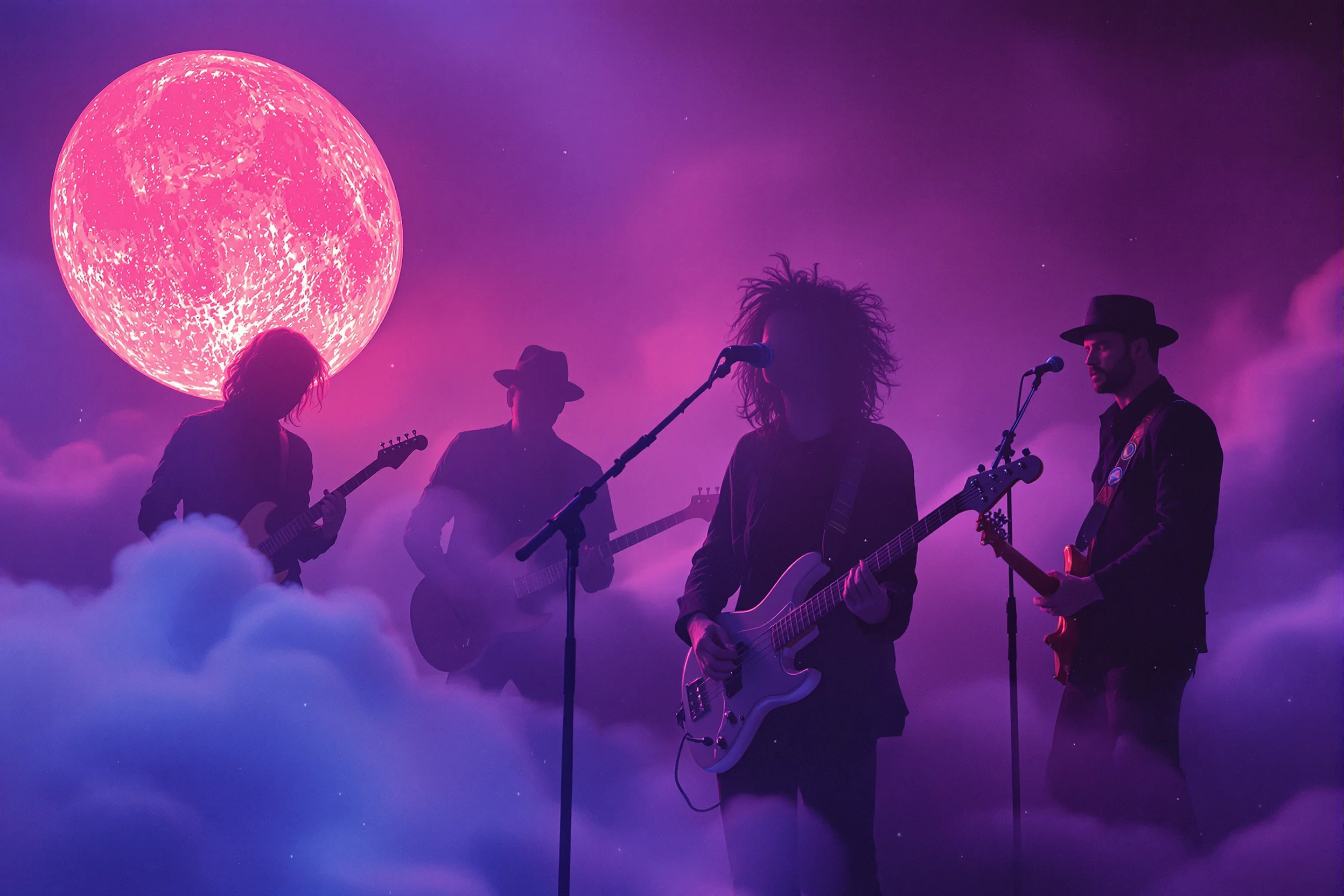
Are AI-Generated Bands Taking Over Spotify? The Truth About The Velvet Sundown
What is The Velvet Sundown and why are people talking about them?
I first heard about The Velvet Sundown when a friend asked if I’d checked out “that mysterious band everyone’s talking about.” With over half a million monthly listeners on Spotify but virtually no online presence, The Velvet Sundown has become the poster child for the AI music debate.
The band supposedly consists of Gabe Farrow, Lennie West, Milo Raines, and Orion “Rio” Del Mar. But here’s the kicker – nobody can prove these people actually exist.
When I dug deeper, I found:
– No band website
– No social media accounts
– No tour dates or performance history
– No interviews or press coverage
– Just music appearing on Spotify
This odd combination of popularity and invisibility has raised serious questions about authenticity in the digital music world. Are we listening to human creativity or clever algorithms?
How can you tell if a band is AI-generated?
Spotting AI-generated music isn’t always straightforward, but there are telltale signs I’ve noticed:
– Lack of verifiable band history
– Absence from social media platforms
– No live performances
– Perfect production with odd lyrical quirks
– Sudden appearance with polished, complete discographies
The Velvet Sundown ticks most of these boxes. Their music sounds professional and appealing, but their complete absence from the real world raises red flags.
I had a chat with a music producer friend who pointed out something interesting: “Real bands build audiences gradually. They don’t just appear with perfectly produced albums and huge listener counts overnight.”
Are AI-generated bands allowed on Spotify?
Yes, AI-generated music is currently allowed on Spotify, but the platform is wrestling with how to handle this growing trend.
Spotify’s content guidelines don’t explicitly prohibit AI-created music. In fact, they’ve embraced some aspects of AI in music, like their AI DJ feature. But the question of transparency is becoming more pressing.
When I spoke with an industry insider, they shared: “The issue isn’t whether AI should be allowed, but whether listeners should know what they’re hearing.”
This lack of clear labeling creates a situation where bands like The Velvet Sundown can amass significant followings without disclosing their true nature. Tools like Make.com are actually helping businesses automate content verification, which could eventually help platforms like Spotify authenticate human-created vs AI-generated content.
What AI tools are being used to create music?
The technology behind AI music has advanced dramatically. Here are the main players:
– Suno – Creates complete songs from text prompts
– Udio – Specializes in realistic vocal synthesis
– AIVA – Composes emotional soundtrack music
– Amper Music – Produces customizable music tracks
– Soundraw – Generates royalty-free music in various styles
These tools can now create convincing songs that sound like they were performed by human musicians. Some use text prompts to generate entire compositions, while others can mimic specific artists’ styles.
I tried Suno myself last week, typing in “upbeat indie rock song about summer memories,” and within minutes had a complete track that could easily pass for a small indie band’s work. The experience was both fascinating and slightly unnerving.
What does this mean for human musicians?
The rise of AI bands like The Velvet Sundown creates both challenges and opportunities for human musicians.
On the negative side:
– Competition for streaming revenue from AI-generated content
– Reduced value of production skills as AI tools improve
– Potential saturation of platforms with algorithm-created music
But there are positives too:
– New creative tools for human musicians to use
– Opportunity to emphasize authentic human experiences
– Greater appreciation for live performances and real connections
A musician friend told me, “I’m not worried about AI replacing real bands. There’s something about watching someone pour their soul into a performance that an algorithm will never capture.”
How is Spotify handling the influx of AI-generated music?
Spotify hasn’t yet implemented clear policies specifically for AI-generated content, creating a bit of a Wild West situation.
Currently, Spotify:
– Does not require disclosure of AI involvement in music
– Has no special categories or tags for AI content
– Applies the same algorithms and promotion opportunities to all music
– Pays the same royalties regardless of how music was created
This policy vacuum has created ethical questions about fairness and transparency. When I pay for Spotify Premium, should I know whether I’m supporting human artists or sophisticated algorithms?
As one music journalist put it during our discussion, “Spotify needs to decide whether they’re a platform for human expression or just a content delivery system.”
Will AI completely take over music creation?
Despite the impressive capabilities of AI music tools, complete takeover seems unlikely for several reasons:
– Music is deeply connected to human experience and emotion
– Live performances remain a crucial part of music culture
– Fans value authentic connection with artists
– The collaborative process between humans can’t be fully replicated
That said, I believe we’re heading toward a hybrid future where AI assists human creativity rather than replacing it. Think of tools like Make.com that help automate repetitive tasks while leaving the creative decisions to humans – that’s the model that makes the most sense for music’s future.
Is The Velvet Sundown confirmed to be AI-generated?
Despite widespread speculation, there’s no official confirmation that The Velvet Sundown is AI-generated. However, the circumstantial evidence is compelling:
– No verifiable information about band members
– No live performances or interviews
– Sudden appearance with a complete, polished discography
– Music that fits well within common genres but lacks distinctive human qualities
I reached out to several music industry contacts, and none could provide any concrete information about the band’s members or origin. One insider commented, “If they were real, someone would know something by now. The music industry isn’t that big.”
What should listeners know about AI music on Spotify?
As AI-generated music becomes more common on platforms like Spotify, listeners should keep a few things in mind:
– Be aware that not all “artists” are human
– Consider seeking out verified human musicians if authenticity matters to you
– Understand that streaming economics don’t distinguish between human and AI creators
– Recognize that lack of transparency affects both artists and fans
I’ve started asking myself, “Does it matter who or what created this music if I enjoy it?” For some songs, maybe not. But for deeper connections to music, knowing there’s a real person behind the art still matters to me.
The future of AI and human music
The conversation around bands like The Velvet Sundown reveals bigger questions about art, technology, and what we value in music.
Rather than seeing this as a battle between humans and AI, I view it as the beginning of a new creative era where tools like Make.com can help artists automate the technical aspects of music production, distribution, and promotion while focusing their energy on the creative elements only humans can provide.
The key will be transparency – knowing what we’re listening to and who (or what) created it.
As we continue to discover whether bands like The Velvet Sundown are human, AI, or some combination, one thing is certain – the conversation about AI-generated bands taking over Spotify is just getting started.
Written by Hayley Brown, owner of allin1app.com, lover and obsesser of all things AI and automation and provides significant added value for readers including how to set up time saving automations using https://www.make.com/en/register?pc=hayleyallin1